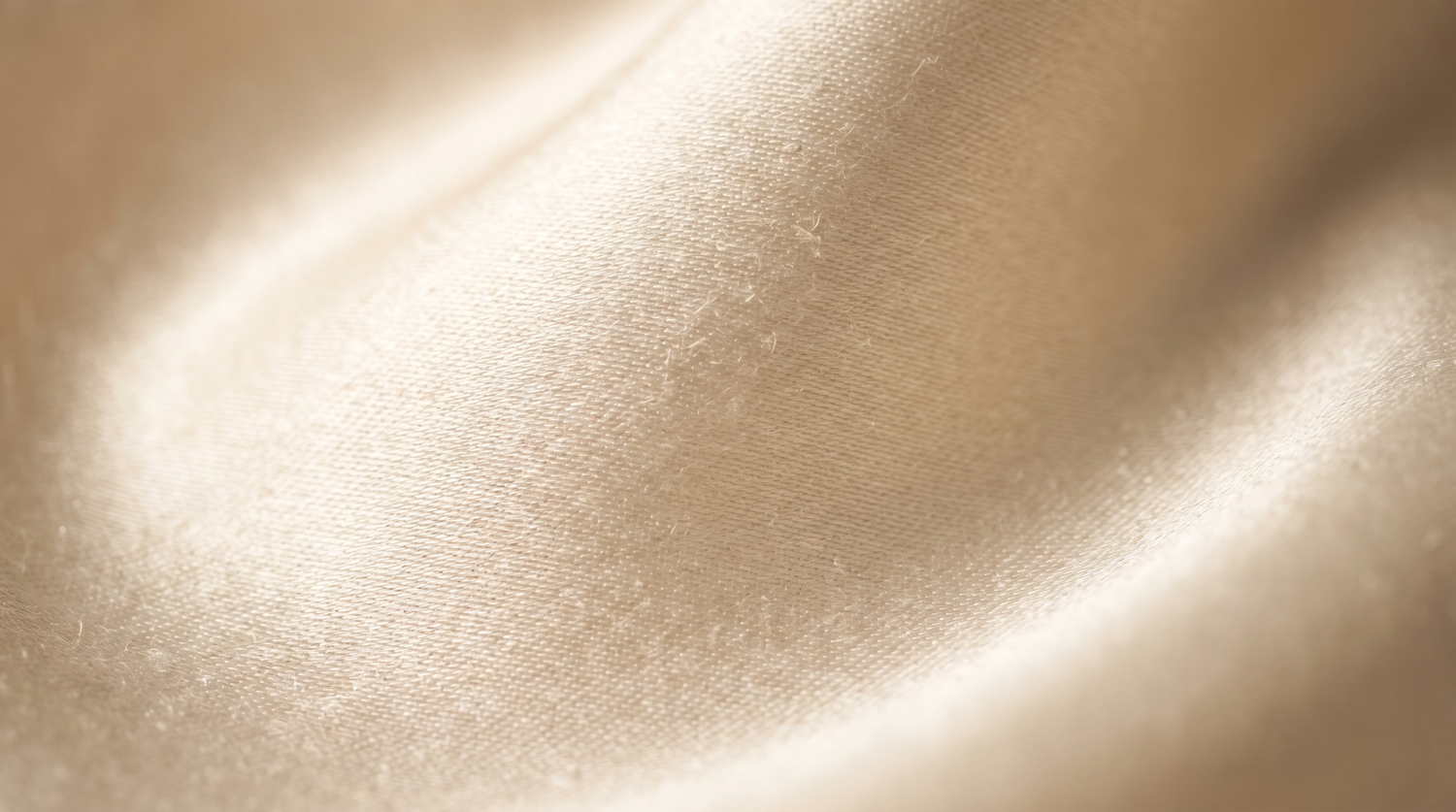
You've probably heard about silk sleep masks many times.
Maybe you've seen them on Instagram. Maybe someone recommended them to you. Or maybe you've wondered if they really make a difference, or if it's just another product that looks beautiful in a paid ad but works like any other in practice.
That's a fair question. And it deserves a fair answer.
Yes, it makes a difference. But not because silk sounds luxurious. It's because its properties at the fiber level are different from anything else you touch while sleeping. I'll explain exactly what that means in a moment.

What exactly is mulberry silk and where does it come from?
Mulberry silk comes from silkworms fed exclusively on mulberry leaves. This is biology, not a marketing gimmick, and it directly affects what you feel on your skin.
The mulberry silkworm produces a silk thread in the form of a single, continuous fiber up to 900 meters long. No breaks, no irregularities, and that's why the fabric woven from it is so smooth that no synthetic can copy it, no matter what the label says.
Other silkworms, fed on different plants, produce shorter, less uniform fibers. The result? A fabric that may look similar but feels and behaves completely differently.
Under a microscope, mulberry silk fiber has a triangular prismatic structure. This is responsible for its characteristic sheen and for the fact that silk doesn't rub against the skin, but glides over it. This is pure physics.

What does "22 momme" mean and why does it matter to you?
Momme (abbreviation: mm) is a unit of measurement for silk fabric density. The higher the number, the thicker, more durable, and more luxurious the fabric feels.
Cheap masks usually have 16 or 19 momme. They look like silk. The first wash passes, then the second, the third, and after a few weeks, they start to lose their softness. The material becomes thinner, less smooth, and the entire "silk effect" disappears.
22 momme is the range where the fabric is dense enough to retain its properties for years. Not for a few weeks. For years, if you take proper care of it.
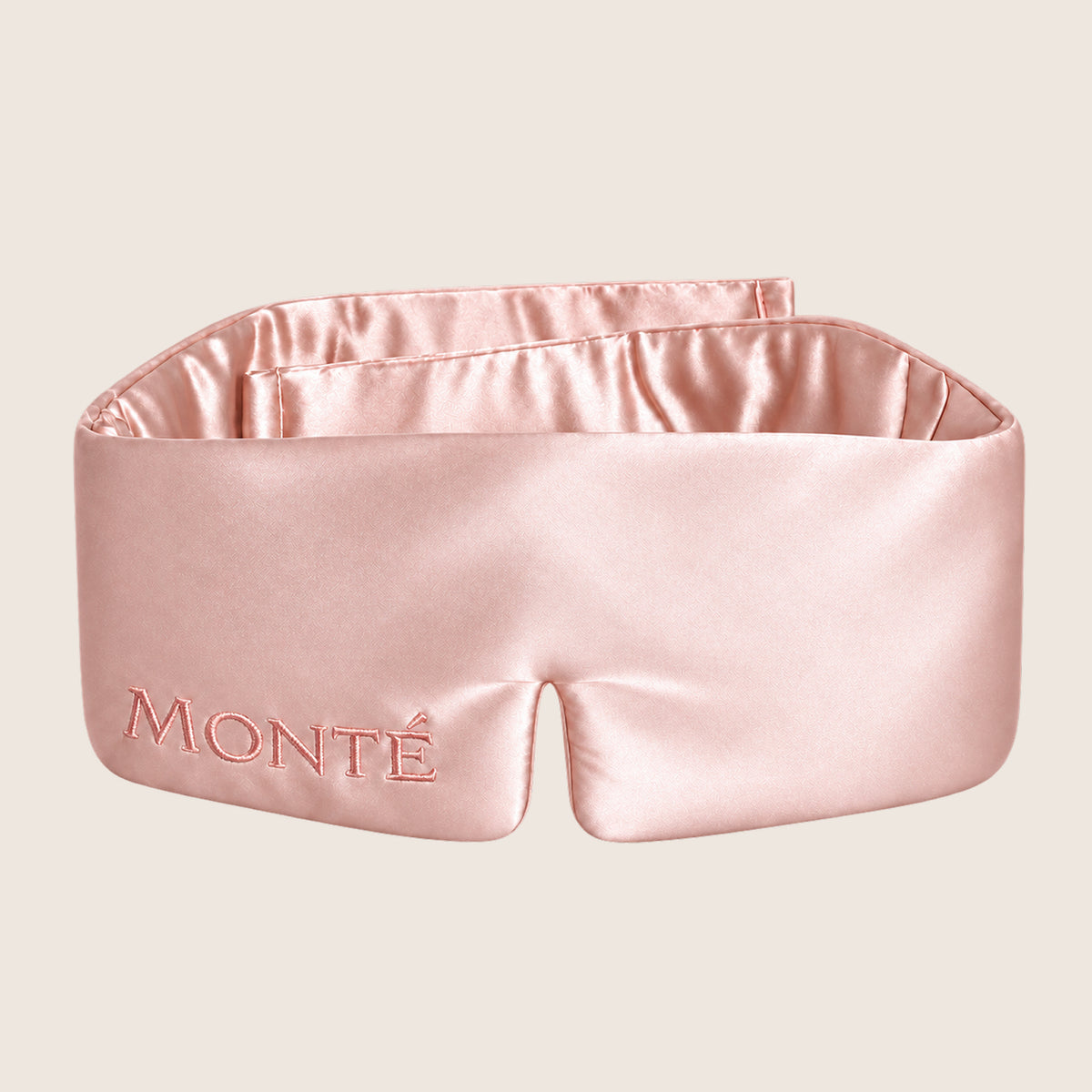
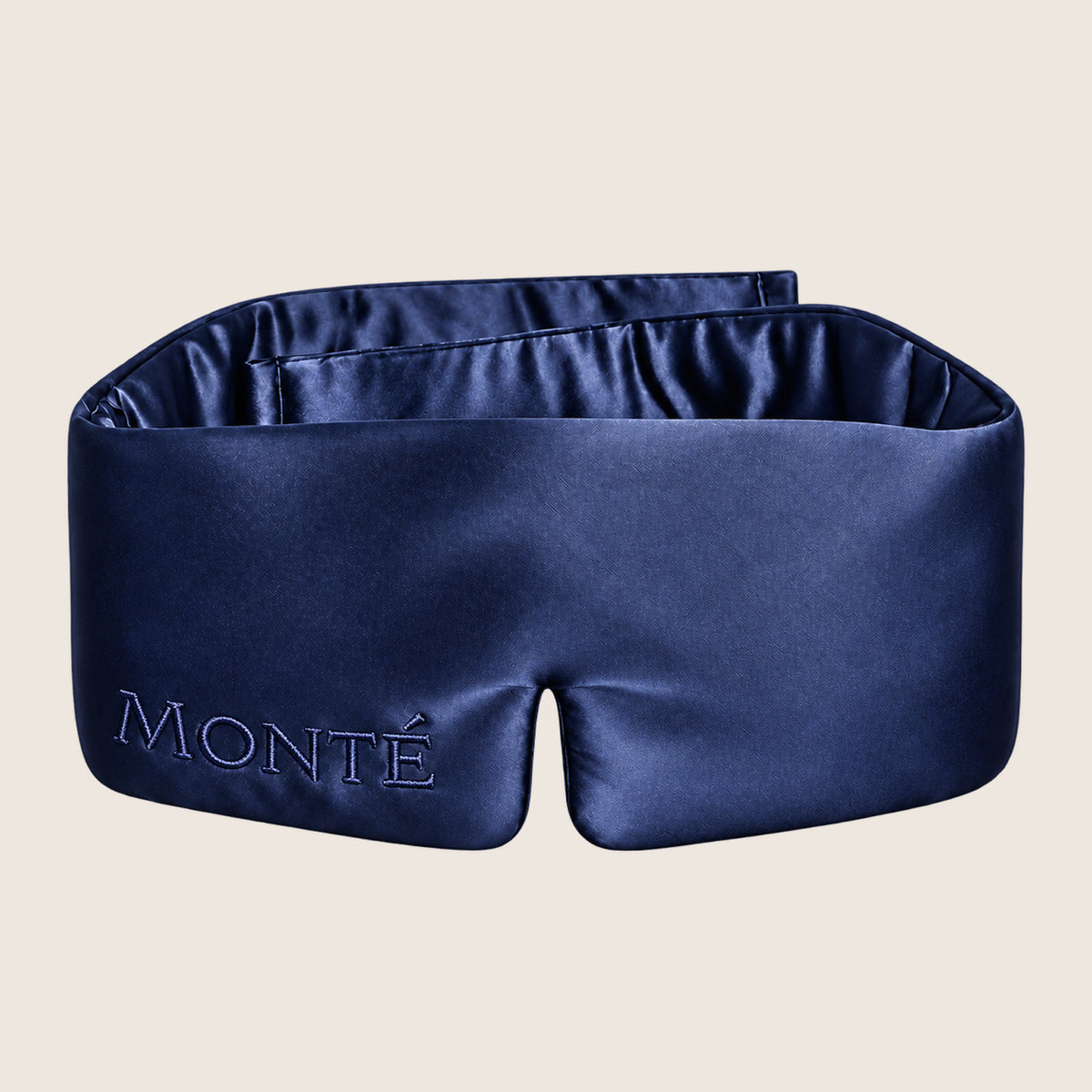
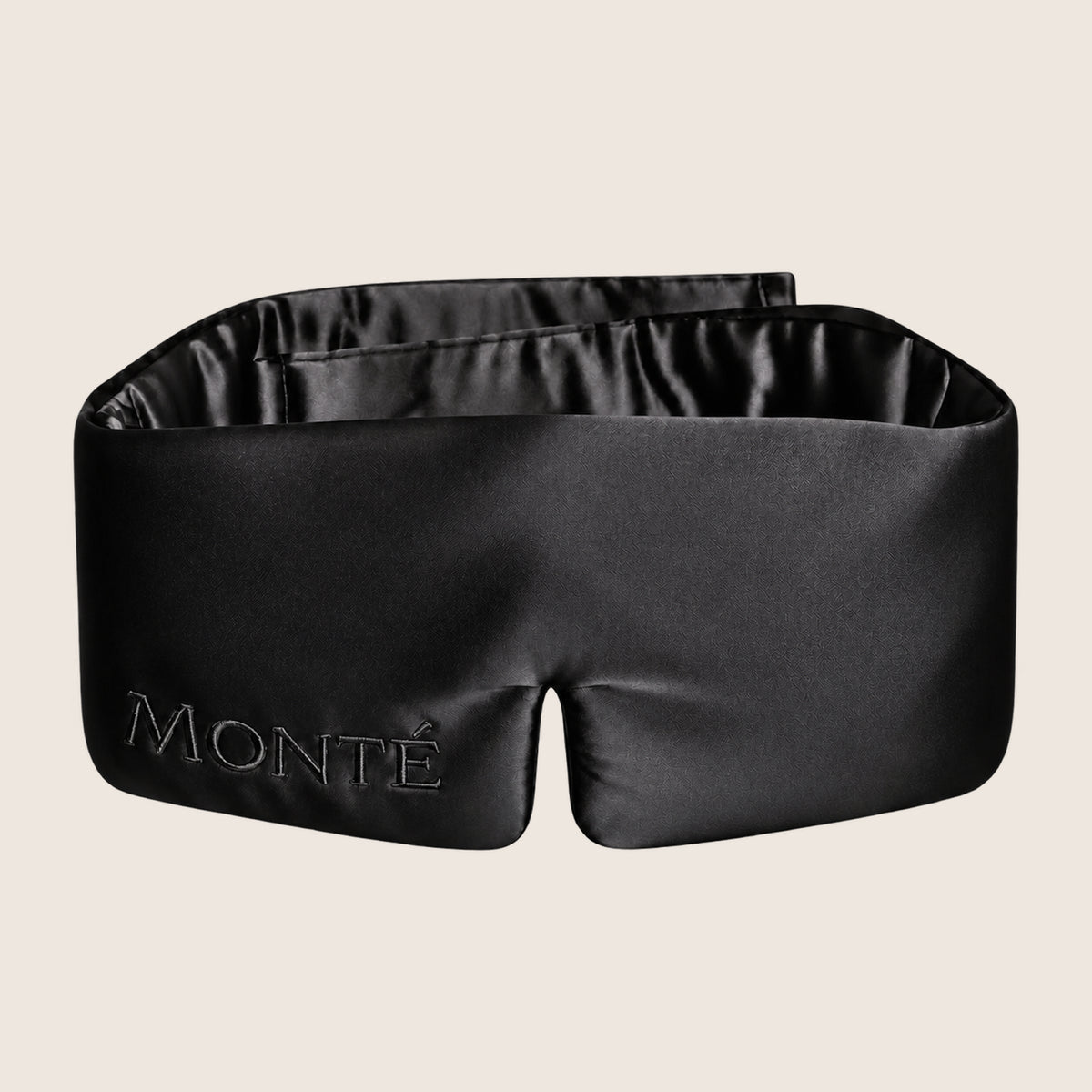
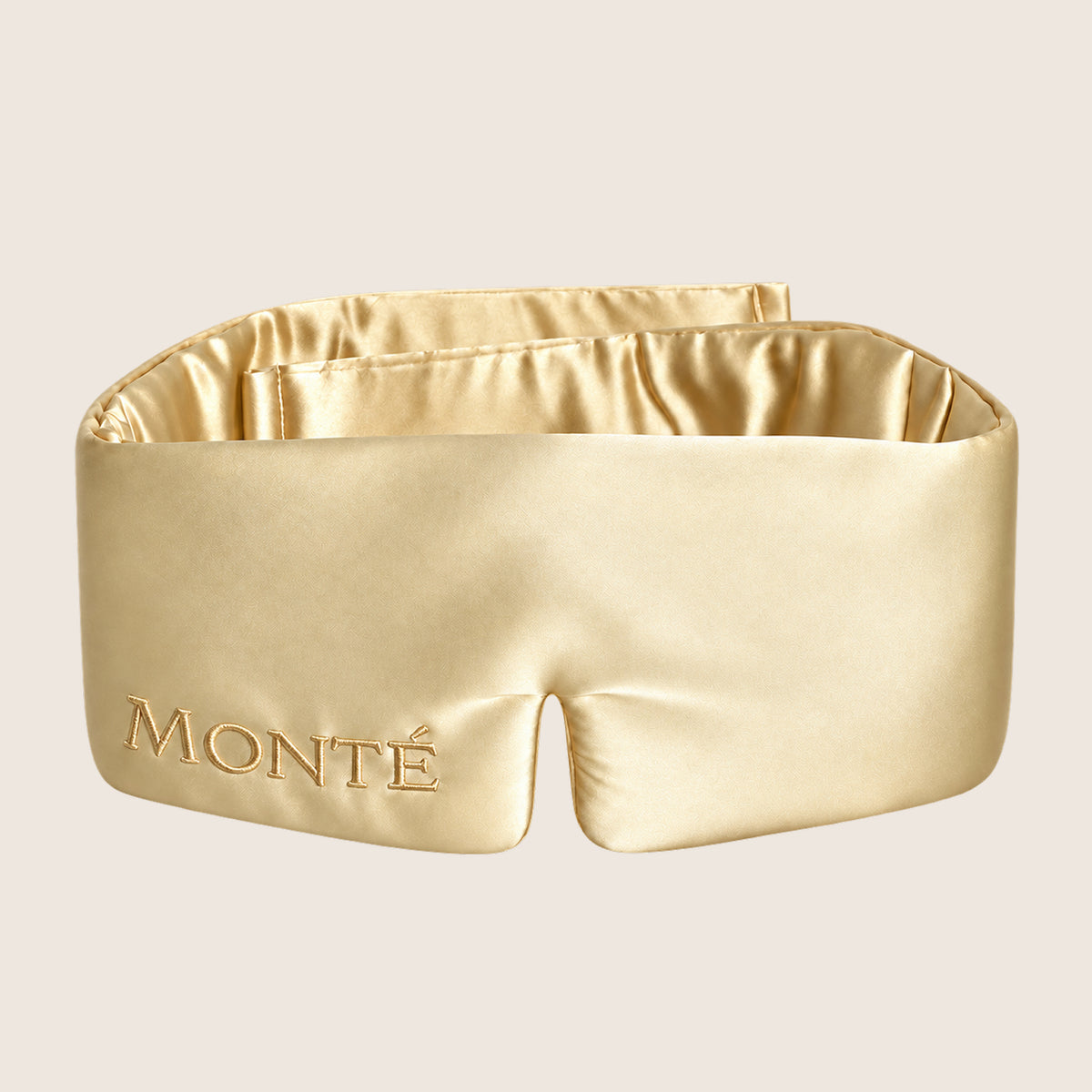
Monté uses grade 6A mulberry silk in 22 momme weight, with an OEKO-TEX Standard 100 certificate. What is an OEKO-TEX certificate? It's an independent verification that the fabric and filling have been produced without any harmful chemical substances, irritants, or allergens. You can put this on your face every night without any concerns.

Why is silk better for skin than cotton?
This is a question that surprises many people, because cotton is associated with something natural and safe.
And yes, cotton is natural. But it's also very absorbent. That's a great feature if you're talking about a towel. Terrible if your face rests on that material for seven or eight hours a night.
Cotton absorbs moisture from your skin and soaks up the cosmetics you applied before bed all night long.
Your moisturizer, retinol serum, and peptides end up in the fabric of your mask or pillow instead of working on your skin overnight.
Mulberry silk behaves differently. Its fibers are naturally protein-based, similar in composition to the keratin present in human skin. It doesn't absorb cosmetics or moisture from the face. The cream you applied in the evening stays exactly where it should: on your skin.
Additionally, silk does not cause mechanical skin creases, which, when regularly sleeping on your side, can be seen in the morning as distinct "impressions" on the cheek and around the eye. Over time, these temporary creases turn into permanent lines. Silk eliminates this problem because there is no friction between the fabric and the skin, only glide.
For people using active night cosmetics, wearing eyelash extensions, or with acne-prone or sensitive skin, silk is not a whim for any of these groups. It's a logical extension of the skincare you already do.

Why does silk work better in summer and winter than synthetics?
Mulberry silk has natural thermoregulatory properties. It wicks moisture away from the skin and adapts to the ambient temperature; it doesn't heat up like polyester synthetics in summer and isn't cold to the touch in winter.
In practice, it means one thing: you don't wake up in the middle of the night with the feeling of a hot fabric on your face. The mask doesn't become a source of discomfort that jolts you awake. You simply don't feel it.

What about light blocking? Does silk really block light?
The fabric itself, without proper filling and construction, will not block light. That's an important distinction.
Monté combines 22 momme mulberry silk with a silk filling and extended coverage that covers the eyes and upper face, including the forehead line. The result: 94% of customers rated the blackout as complete.
Why does this matter? Because melatonin, the hormone responsible for deep sleep, is secreted only in darkness. Any light source—a streetlamp outside the window, a partner's phone screen, the early summer sun at 4:30 AM—disrupts this process. A mask eliminates the problem at its source, without having to cover the window with a blanket.
Summary
Mulberry silk is not a luxury for luxury's sake. It's a fabric with specific biological properties: it doesn't rub, doesn't absorb, thermoregulates, and is hypoallergenic. In the case of a sleep mask, where the material touches your face all night, these properties have real significance, both for sleep quality and skin condition.
That's why Monté is made of 22 momme mulberry silk, and not something cheaper that looks similar at first glance.